Bio
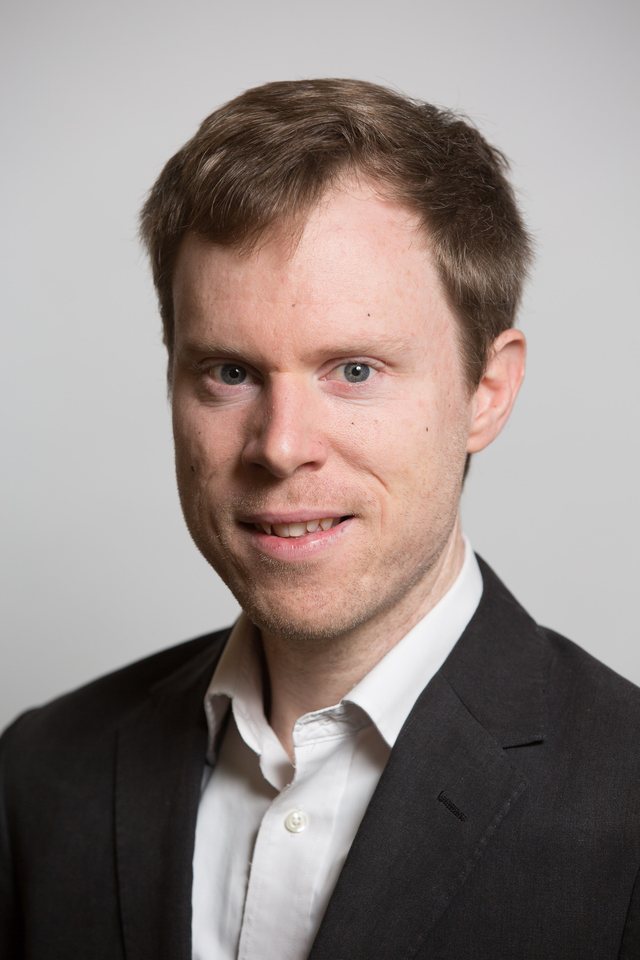
I am a philosopher based at the Australian National University in Canberra, in the Fenner School of Environment & Society, with affiliations at ANU's School of Philosophy and InSpace. My research asks what a genuinely good future for humanity would involve, and how our economies, institutions, and public policies might be reorganised to pursue it. That question runs through my work on the ethics of AI, bioethics and medicine, and space technologies, and increasingly draws me toward ecological economics and the "wellbeing economy": the idea that human and ecological flourishing, rather than endless economic growth, should be the real measure of progress and the aim of public policy.
My book Lunacy: Ten False Promises of the New Space Age (Princeton University Press, 2026) makes this case against one seductive vision of the future, that humanity's destiny lies in colonising space, and argues that our real task is to solve the problems we face here on Earth. I am now extending this work toward questions of how governments might define, measure, and budget for national wellbeing beyond GDP.
Before joining ANU, I was a tenured Assistant Professor in Philosophy at Trinity College Dublin, a Senior Lecturer in Philosophy, Politics and Economics at the University of Liverpool, a Laurance S. Rockefeller Fellow at the Princeton University Center for Human Values (2019–2020), and a visiting senior research fellow at the University of Oxford. Alongside my academic work, I write for a general audience in outlets including The New York Times, The Guardian, and The Sydney Morning Herald.
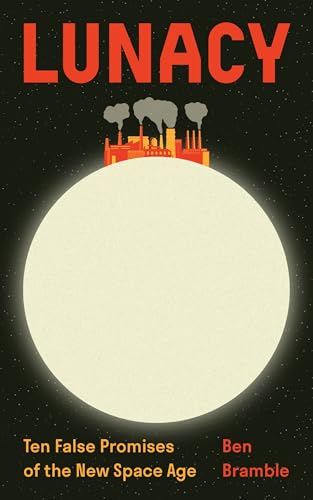
Lunacy: Ten False Promises of the New Space Age
If business titans, corporations, and governments have their way, humans will one day live and work in space. In this book I argue that the much-vaunted New Space Age is a giant mistake. I take the ten most influential arguments for a new era of space settlement, from Mars as a backup plan for humanity to the promise of befriending extraterrestrials, and show why each one fails. Along the way I ask what the point of the human story really is, and what a genuinely good future would involve. It is not a case against space science, but for one driven by curiosity about space itself rather than narrow economic or military interests.
-
The New Zealand Listener · Jul 2026Book of the day: Lunacy — Ten False Promises of the New Space AgeSam Finnemore reviews the book as the Listener’s Book of the Day. (Subscriber.)
-
Nautilus · Jun 202611 Books to Read This JulyChosen among the month’s best reads: “a harsh—and much needed—reality check.”

Lunacy featured in Nautilus’s July reading list. Image: Nautilus.
Writings
Academic
Over twenty articles in journals including The Journal of Philosophy, Ethics, and Philosophical Studies.
Full publication list on PhilPapers Selected articlesAgainst Flesh: Why We Should Eschew (Not Chew) Lab-Grown and ‘Happy’ MeatNew Omnivorism and Strict Veganism (Routledge) · 2023
Even meat produced without suffering, from ‘happy’ farms or lab-grown cells, is morally off to eat, once we grasp how intimately an animal’s body is bound up with everything of value in its life.
Read on PhilPapersPassé PainsMidwest Studies in Philosophy · 2022
Why are pains bad for us? Drawing on people who are unbothered by certain pains, argues that a pain ceases to be bad once it has become ‘just more of the same’.
Read on PhilPapersThe Defective Character Solution to the Non-identity ProblemThe Journal of Philosophy · 2021
Defends a solution to the non-identity problem: when acts that harm nobody still seem wrong, it is because they issue from a morally dubious character trait, not because of what they produce.
Read on PhilPapersWelfarismInternational Encyclopedia of Ethics · 2021
An overview of welfarism, the view that the value of a world is fully fixed by how well its inhabitants fare. Written for the International Encyclopedia of Ethics.
Read on PhilPapersUnknown pleasuresPhilosophical Studies · 2020
Argues that pleasures and pains can exist without the subject being aware of them at the time, replying to the leading attitudinal theories of pleasure defended by Chris Heathwood and Fred Feldman.
Read on PhilPapersEvaluative Beliefs FirstOxford Studies in Normative Ethics · 2018
Argues that evaluative thinking comes first: it is only because we judge things to be valuable that we come to want or care about anything at all, which helps explain the special role of pleasure and pain in our lives.
Read on PhilPapersEvolutionary Debunking Arguments and Our Shared Hatred of PainJournal of Ethics and Social Philosophy · 2017
Examines de Lazari-Radek and Singer’s claim that at least one moral belief resists evolutionary debunking, focusing on our shared hatred of pain.
Read on PhilPapersThe Experience MachinePhilosophy Compass · 2016
Reconstructs Nozick’s experience machine objection to hedonism, surveys recent criticisms, and questions whether the thought experiment really leaves desire-based theories of well-being untouched.
Read on PhilPapersThe Case Against MeatThe Moral Complexities of Eating Meat (OUP) · 2015
A simple but powerful argument against raising and killing animals for food: it is extremely bad for the animals and only trivially good for us, with new replies to four major objections.
Read on PhilPapersOn Susan Wolf’s “Good-for-Nothings”Ethical Theory and Moral Practice · 2015
A reply to Susan Wolf’s APA Presidential Address, defending welfarism about value against her arguments from the worth of great art, literature, music, and philosophy.
Read on PhilPapersConsequentialism about Meaning in LifeUtilitas · 2015
Defends the view that a life is meaningful to the extent that one’s surviving, or one’s having existed, makes the world better in some way.
Read on PhilPapersWhole-Life WelfarismAmerican Philosophical Quarterly · 2014
Defends whole-life welfarism: something is good only if it makes someone better off across their life as a whole, which dissolves puzzles about the badness of death and additive aggregation.
Read on PhilPapersThe distinctive feeling theory of pleasurePhilosophical Studies · 2013
Revives the unfashionable view that what makes an experience pleasant or unpleasant is a distinctive kind of feeling, arguing against both attitude theories and phenomenological theories.
Read on PhilPapersPublic writing
Essays and opinion for a general audience.
- The Guardian · 2026We are preparing to transform the moon and Mars. The public must have a say in this future
- The Conversation · 2025Should humans colonise space? We asked 5 experts
- The Guardian · 2023Novak Djokovic’s 23rd grand slam is a record, but please don’t call him the GOAT
- ABC Religion & Ethics · 2022Australia has its first “wellbeing budget”, but do we need one?
- Sydney Morning Herald · 2022There’s only one way Will Smith can make amends: give the award back
- Sydney Morning Herald · 2021The space tourism plans of Bezos, Musk and Branson are morally reprehensible
- The Guardian · 2021 · with Peter CollignonLet’s inoculate at-risk Australians then send Covid vaccines overseas
- The Conversation · 2021Are COVID vaccines vegan? Should I get one anyway? An ethicist explains
- Cato Unbound · 2021Challenge trials are a poor substitute for an effective pandemic response
- Cato Unbound · 2021Challenge trials and the flourishing life
- The Conversation · 2020Challenge trials for a coronavirus vaccine are unethical, except in one unlikely scenario
- The Critic · 2020Why the orthodox Covid-19 narrative is right
- The Canberra Times · 2020A Biden win won’t undo America’s extreme polarisation. Here’s what might
- The Conversation · 2017Lab-grown meat could let humanity ignore a serious moral failing
Contact
Ben Bramble
Fenner School of Environment & Society
Australian National University
Canberra, ACT, Australia
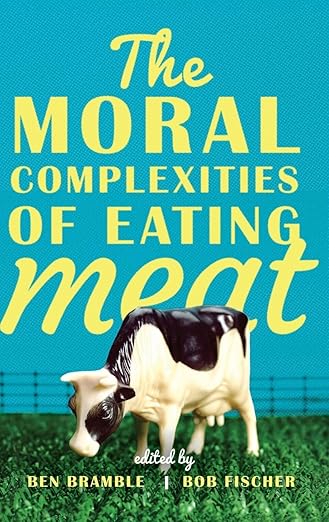
The Moral Complexities of Eating Meat
An edited collection, with Bob Fischer, of twelve new essays by leading moral philosophers on a deceptively simple question: is eating meat ever a morally responsible choice? The contributors reach provocative and often counterintuitive conclusions, from defences of meat-eating to the argument that even ordering fries at McDonald’s helps prop up the industry. A stimulating way into the debate over food and animal ethics.
The Passing of Temporal Well-Being
Philosophers usually distinguish lifetime well-being (how good a life is as a whole) from temporal well-being (how well off someone is at a particular moment), and most assume the first is built out of the second. In this short book I argue that this rests on a mistake: there is no such thing as temporal well-being. The only genuine kind of well-being is the well-being of a whole life.

Pandemic Ethics: 8 Big Questions of COVID-19
A clear and provocative introduction to the ethics of COVID-19, for students, academics, policymakers, and general readers alike. The book maps the moral questions the pandemic forced on us and the connections between them: how long to stay locked down, how to allocate ventilators, what we owe one another, and how we might remake society once it was over. It is open access and free to read.
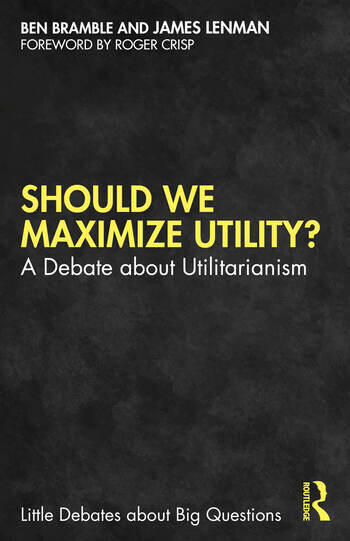
Should We Maximize Utility? A Debate about Utilitarianism
Co-written with James Lenman, with a foreword by Roger Crisp. Utilitarianism tells us to act in ways that impartially maximise welfare. Lenman argues that this leads to imperious moral overreach and, in the end, leaves us morally clueless. I defend a new form of utilitarianism built to escape the familiar objections, by treating it not as a theory of right action but as a claim about what we have most reason to do. Part of Routledge’s Little Debates about Big Questions series.